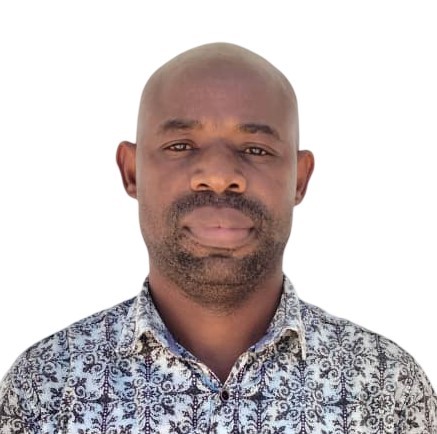
Senior Research Scientist Mariculture Aquaculture & Hatchery Management Fish Breeding • Live Feed Production • Larval Nutrition • Silvofisheries Location Shimoni Mariculture Centre Years of Experience 2019-Present (7 years at KMFRI) Research Interests Marine fish and crustacean breeding and hatchery management; Silvofisheries and integrated coastal aquaculture systems; Live feed production and Artemia (brine shrimp) culture; Larval nutrition, dietary supplements, and feed additives; Fish larvae immunology and microbiology | Research Focus: Marine fish breeding and live feed production, with particular emphasis on improving fish larvae quality through dietary supplements, microbiology, and feed additives that strengthen larval immunity. Sheban Mdzomba Hinzano holds a Bachelor of Science in Fisheries and Aquatic Sciences from Moi University, Kenya, and a Master of Science in Aquaculture from the University of Gent, Belgium, completed on a VLIR-UOS scholarship. He currently serves as a Senior Research Scientist in the Mariculture Department at the Kenya Marine and Fisheries Research Institute (KMFRI), Shimoni Centre. His work centers on marine fish breeding and live feed production, with particular emphasis on improving fish larvae quality through dietary supplements, microbiology, and feed additives that strengthen larval immunity. This has translated into hatchery-focused studies on optimizing Artemia (brine shrimp) feeding densities for prawn larvae and comparative research on locally sourced versus imported Artemia for catfish larval rearing. Over four years at KMFRI, he has produced peer-reviewed research on crustacean and fish larval rearing while contributing to national capacity-building initiatives. He has led training on seaweed farming technologies and marine resource-use conflict resolution along Kenya's southern coast, and on marine hatchery management, live feed production, and fish grow-out pond management. He works closely with fellow KMFRI scientists and has partnered with other government agencies, NGOs, private investors and farming communities through projects such as Blue Empowerment, APTSAD, SADYISA and KMFsED, applying tools like Kobo collect and Multicriteria Mapping to support participatory fisheries decision-making. By linking applied hatchery research with farmer- and officer-level training, Hinzano's work strengthens Kenya's aquaculture value chain, improves hatchery productivity, and supports coastal communities in building sustainable, science-based livelihoods within the country's blue economy. Research & Administrative Responsibility
Research Interest / Areas of Expertise
Academic Qualifications
Professional Membership
Selected Publications Dey, B. K., Dugassa, G. H., Hinzano, S. M., & Bossier, P. (2020). Causative agent, diagnosis and management of white spot disease in shrimp: A review. Reviews in Aquaculture, 12(2), 822-865. Hinzano, S. M., Okalo, F. A., Ngarari, M. M., Opiyo, M. A., Ogello, E. O., Fulanda, A. M., & Nyonje, B. (2022). Phytoplankton distribution along a salinity gradient in two Kenyan saltworks (Tana and Kurawa). Western Indian Ocean Journal of Marine Science, 21(1), 113-124. Opiyo, M., Mizri, V., Musa, S., Kyule, D., Hinzano, S., Wainaina, M., & Ombwa, V. (2020). Fish disease management and biosecurity systems. State of Aquaculture in Kenya, 97-126. Ngarari, M. M., Hinzano, S. M., Opiyo, M. A., Rugendo, D. G., Midumbi, D. O., Okalo, F. A., & Gatune, C. W. (2024). Salinity tolerance, growth and survival of three Artemia franciscana (Kellogg, 1906) populations under laboratory conditions. Aquaculture, Fish and Fisheries, 4(2), e166. Hinzano, S. M., Ngarari, M. M., Opiyo, M., Betty Mindraa Nyonje, F. O., Midumbi, D., & Gitari, D. (2023). Effects of feeding different densities of Artemia nauplii on the growth and survival of larvae of the hairy river prawn, Macrobrachium rude (Heller, 1862). Ege Journal of Fisheries & Aquatic Sciences (EgeJFAS)/Su Ürünleri Dergisi, 40(4). Links |