
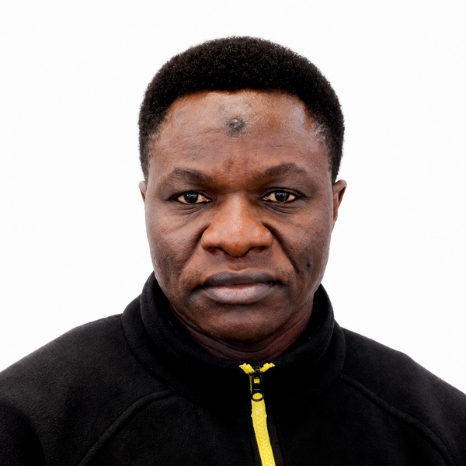
Research Scientist Limnology Department Aquatic Ecology & Fisheries Limnology • Hydroacoustics • Ecosystem Modelling • Water Quality Location Kisumu Center Years of Experience Joined in 2012 (14 years at KMFRI) Research Interests Aquatic Ecology, Limnology and Freshwater Ecosystem Functioning; Fisheries Stock Assessment, Hydroacoustics and Ecosystem Modelling; Water Quality, Environmental Biogeochemistry and Aquatic Pollution; Remote Sensing, GIS and Environmental Monitoring for Aquatic Systems; Climate Change, Ecosystem Resilience and Blue Economy Sustainability | Research Focus: Advancing understanding of ecological processes regulating fish populations in Lake Victoria and providing scientific evidence to support ecosystem-based fisheries management and biodiversity conservation. Dr. Collins Ongore is a Research Scientist at the Kenya Marine and Fisheries Research Institute (KMFRI) with over 15 years of experience in aquatic sciences, fisheries, and freshwater ecosystem research. He holds a Ph.D. in Biology from the University of St Andrews, Scotland, UK. His doctoral thesis, Inter-annual Variability in Abundance of Key Fish and Pelagic Crustacean Species in the Lake Victoria 'Natural Laboratory': From Ecosystem Understanding to Fisheries Management, advanced understanding of the ecological processes regulating fish populations in Lake Victoria and provided scientific evidence to support ecosystem-based fisheries management and biodiversity conservation. Dr. Ongore's expertise spans limnology, aquatic ecology, ecosystem modelling, hydroacoustic fisheries stock assessment, water quality assessment, environmental biogeochemistry, remote sensing, geographic information systems (GIS), and advanced data analytics. He serves as the Lead Scientist for environmental monitoring within the Lake Victoria Fisheries Organization (LVFO) regional hydroacoustic fish stock assessment programme, coordinating limnological investigations and integrating hydroacoustic, ecological, and geospatial data to assess fish stocks and ecosystem health across Lake Victoria. His research addresses aquatic pollution, climate change, invasive aquatic plants, ecosystem resilience, and blue economy development. He collaborates with leading institutions including the University of St Andrews, University of Eldoret, Nagasaki University, the British Geological Survey (BGS), UK Centre for Ecology & Hydrology (UKCEH), LVFO, Uganda's National Fisheries Resources Research Institute (NaFIRRI), Tanzania Fisheries Research Institute (TAFIRI), the Regional Centre for Mapping of Resources for Development (RCMRD), the University of Nottingham, and King's College London, strengthening regional scientific capacity and transboundary management of the African Great Lakes. Dr. Ongore has authored numerous peer-reviewed publications, policy briefs, technical reports, and scientific datasets. He is a registered Environmental Impact Assessment and Environmental Audit (EIA/EA) Lead Expert with Kenya's National Environment Management Authority (NEMA) and a member of the Society for Environmental Geochemistry and Health (SEGH) and the Environmental Institute of Kenya (EIK). His work bridges science, policy, and practice to advance sustainable fisheries, resilient freshwater ecosystems, and evidence-informed environmental governance across East Africa. Research & Administrative Responsibility
Research Interest / Areas of Expertise
Academic Qualifications
Professional Membership
Professional Services
Selected Publications Ongore, C.O. (2026). Inter-annual Variability in Abundance of Key Fish and Pelagic Crustacean Species in the Lake Victoria 'Natural Laboratory': From Ecosystem Understanding to Fisheries Management. Ph.D. Thesis, University of St Andrews, Scotland, United Kingdom. Ongore, C.O., Aura, C.M., Ogari, Z., Njiru, J.M., & Nyamweya, C.S. (2018). Spatial-temporal dynamics of water hyacinth (Eichhornia crassipes), other macrophytes, and their impact on fisheries in Lake Victoria, Kenya. Journal of Great Lakes Research, 44(6), 1273-1280. Proud, R., Mangeni-Sande, R., Kayanda, R.J., Ongore, C., et al. (2020). Automated classification of schools of the silver cyprinid (Rastrineobola argentea) in Lake Victoria acoustic survey data using Random Forests. ICES Journal of Marine Science, 77(4), 1379-1390. Nyamweya, C., Natugonza, V., Taabu-Munyaho, A., Aura, C., Ongore, C.O., et al. (2020). A century of drastic change: Human-induced changes of Lake Victoria fisheries and ecology. Fisheries Research, 230, 105564. May, L., Dobel, A.J., & Ongore, C. (2022). Controlling water hyacinth (Eichhornia crassipes): A proposed framework for preventative management. Inland Waters, 12(1), 163-172. Marriott, A.L., Osano, O.F., Coffey, T.J., Humphrey, O.S., Ongore, C.O., et al. (2023). Considerations for environmental biogeochemistry and food security for aquaculture around Lake Victoria, Kenya. Environmental Geochemistry and Health. Aura, C.M., Humphrey, O.S., Marriott, A.L., Watts, M.J., Ongore, C.O., et al. (2024). Assessing the spatial distribution of elemental concentrations in surface sediments of Lake Victoria, Kenya: Implications for ecological health and management. Environmental Geochemistry and Health. Hamilton, S.E., McGehee, D.D., Nyamweya, C., Ongore, C., et al. (2022). High-resolution bathymetries and shorelines for the Great Lakes of the White Nile basin. Scientific Data, 9, 642. Aura, C.M., Ongore, C., Musa, S., Njonge, F., & Ntiba, M. (2025). An approach towards the quantification of the dynamics of a lacustrine bay based on blue economy investments. Limnologica. (Accepted). Aura, C.M., Awandu, H., Ongore, C.O., Musa, S., Humphrey, O.S., et al. (2025). Outreach and knowledge mobilization for the effective use of adaptive strategies for land-lake-based resilience. Discover Conservation, 2, 47. Links |