
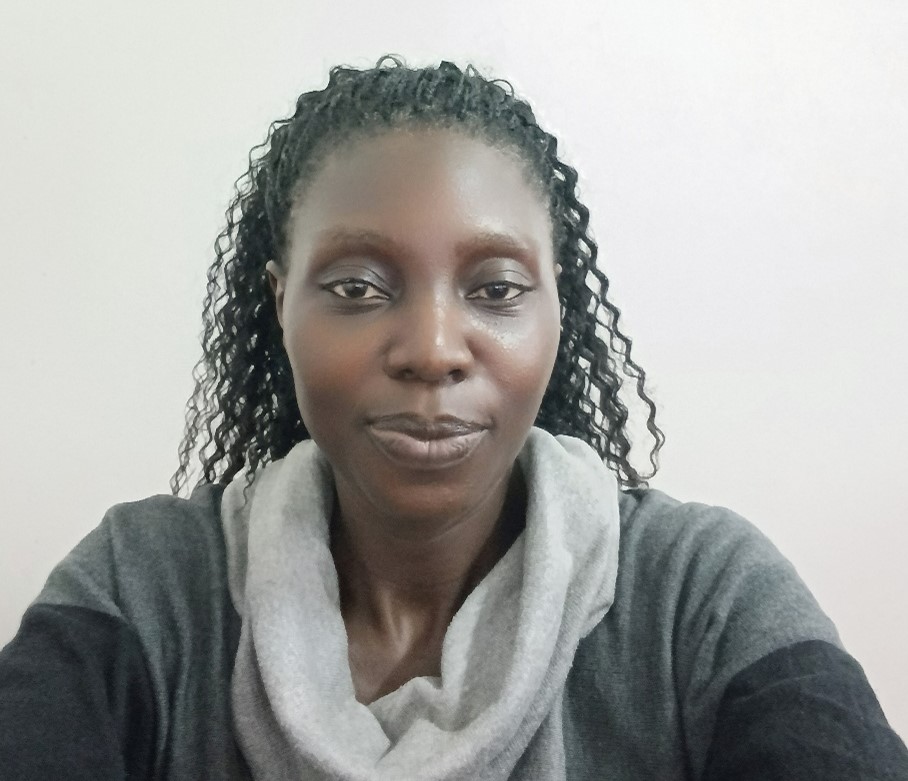
Senior Research Scientist Oceanography & Hydrography Marine Pollution & Phytoplankton Ecology HABs • Blue Carbon • Radiochemistry • Seafood Safety Location KMFRI Mombasa Years of Experience 2012–Present (14 Years at KMFRI) Department Oceanography and Hydrography Research Interests Marine pollution and contaminant pathways; Radiochemistry and sediment dating; Blue carbon and carbon sequestration processes; Harmful Algal Blooms (HABs) and seafood safety; Biogeochemical cycling in coastal and estuarine systems; Environmental monitoring using nuclear techniques | Research Focus: Advancing marine pollution research through phytoplankton ecology, harmful algal bloom biotoxin monitoring, blue carbon assessments, and seafood safety to strengthen Kenya's national monitoring frameworks and coastal resource management. Linet Kiteresi Imbayi is a Marine Scientist at the Kenya Marine and Fisheries Research Institute (KMFRI), specializing in marine pollution, phytoplankton ecology, harmful algal bloom (HAB) biotoxins, and seafood safety. She holds a Bachelor of Science in Fisheries and Aquatic Sciences and a Master of Philosophy in Environmental Studies (Environmental Health), qualifications that established her expertise in aquatic ecosystems, environmental contaminants, and public health. Her research focus is on biogeochemical processes in coastal environments, including sedimentation, heavy metals, eutrophication, Naturally Occurring Radioactive Material (NORM), and toxin accumulation in marine biota. With advanced training in radiochemistry, biochemistry and seafood safety, she integrates laboratory analytics with spatial data interpretation to strengthen Kenya's national monitoring frameworks. She has contributed to several national and international initiatives, including International Atomic Energy Agency (IAEA)‑supported projects on HAB sampling, toxin quantification, and radio‑assay techniques and Blue carbon sequestration in marine environments. She coordinates fieldwork, refines extraction protocols, trains research teams, and manages collaborative sample processing across institutions. As Kenya's IAEA project counterpart, she generates evidence‑based data that informs seafood safety policies and coastal resource management. Her achievements include developing seafood safety protocols, producing scientific documentation for marine spatial planning, and supporting climate‑responsive ecosystem management. Her work has improved laboratory reliability, enhanced stakeholder engagement, and strengthened Kenya's capacity in blue food safety and marine pollution assessment. Beyond research, Linet is committed to scientific communication, mentorship, mariculture training, and community outreach. Her professional interests include marine ecosystem modeling, climate impact communication, blue carbon conservation, applied radiochemistry, and sustainable fisheries development. Research & Administrative Responsibility
Research Interest / Areas of Expertise
Academic Qualifications
Professional Membership
Selected Publications Adams, J. B., Pattrick, P., Masqué, P., Adotey, D., Elsheikh, A. B., Awatif, M. A. B., Ben Hamouda, M. F., Benmansour, M., Charles, J., Harlay, J., Human, L., Imbayi, L. K., Ismail, R. O., Machite, A., Mejjad, N., Mfikili, A., Mumo, N., Ndeye, M., Panassa, W. E., Sakho, I., Suleiman, S., & Hatje, V. (2026). Blue carbon stocks, accumulation rates and knowledge gaps in Africa. Ocean & Coastal Management, 277, 108208. https://doi.org/10.1016/j.ocecoaman.2026.108208 Zepernick, B. N., Hart, L. N., Chase, E. E., Natwora, K. E., Obuya, J. A., Olokotum, M., Houghton, K. A., Kiledal, E. A., Achieng, D., Barker, K. B., Basweti, G. M., Beal, M., Brown, K. M., Byrne, A., Drouillard, K. G., Getabu, A., Kiteresi, L. I., Lawrence, T., Lomeo, D., Miruka, J. B., Mohney, S., Njiru, J., Okutoyi, P., Omondi, R., Otieno, D., Owino, O. A., Owoko, W., Owuor, B., Shitandi, A., Stoll, J., Swaleh, M., Tebbs, E., Varga, E., Wagner, R. S., Sheik, C. S., Sherman, D. H., Dick, G. J., Wilhelm, S. W., Sitoki, L., Otiso, K. M., McKay, R. M. L., & Bullerjahn, G. S. (2024). Molecular investigation of harmful cyanobacteria reveals hidden risks and niche partitioning in Kenyan lakes. Harmful Algae, 140, 102757. https://doi.org/10.1016/j.hal.2024.102757 Drouillard, K. G., Campbell, L., Otieno, D., Achiya, J., Getabu, A., Mwamburi, J., Sitoki, L., Omondi, R., Shitandi, A., Owuor, B., Njiru, J., Bullerjahn, G., McKay, R. M., Otiso, K. M., Tebbs, E., Barker, K., Beal, M., Brown, K., Byrne, A., Kiteresi, L. I., Lomeo, D., Mohney, S., Natwora, K., Owino, O. A., Stoll, J., Swaleh, M. N., Varga, E., Wagner, R., & Zepernick, B. (2024). Increasing mercury bioaccumulation and biomagnification rates of Nile perch (Lates niloticus L.) in Winam Gulf, Lake Victoria, Kenya. Science of the Total Environment, 916, 170059. https://doi.org/10.1016/j.scitotenv.2024.170059 Oduor, N.A., Munga, C.N., Kiteresi, L.I., Botwe, P.K., Nyanjong, E.O., Muthama, C.M., Mise, N.A., and Moosdorf, N. (2024). Anthropogenic nutrients and phytoplankton diversity in Kenya's coastal waters: An ecological quality assessment of sea turtle foraging sites. Marine Pollution Bulletin, 199: 115897. https://doi.org/10.1016/j.marpolbul.2023.115897 Okuku, E.O., Owato, G.O., Kiteresi, L.I., Otieno, K., Kombo, M.M., Wanjeri, V., Mbuche, M., Gwada, B., Chepkemboi, P., Achieng, Q., Nelson, A., Mulupi, L. and Mwalugha, C. S. (2022). Are tropical estuaries a source of or a sink for marine litter? Evidence from Sabaki Estuary, Kenya. Marine Pollution Bulletin, 176: 113397. https://doi.org/10.1016/j.marpolbul.2022.113397 Okuku, E.O., Owato, G.O., Otieno, K., Kombo, M.M., Mbuche, M.C., Gwada, B., Chepkemboi, P., Wanjeri, V., Kiteresi, L.I., Achieng, Q. and Nelson, A. (2022). The influence of monsoons on the spatial distribution and composition of floating marine litter. Marine Pollution Bulletin, 175: 113386. https://doi.org/10.1016/j.marpolbul.2022.113386 Okuku, E.O., Kiteresi, L.I., Owato, G.O., Otieno, K., Omire, J., Kombo, M.M., Mwalugha, C., Mbuche, M., Gwada, B., Wanjeri, V., Nelson, A., Chepkemboi, P., Achieng, Q. and Ndwiga, J. (2021). Temporal trends of marine litter in a tropical recreational beach: A case study of Mkomani beach, Kenya. Marine Pollution Bulletin, 167: 112273. https://doi.org/10.1016/j.marpolbul.2021.112273 Okuku, E.O., Kiteresi, L.I., Owato, G.O., Otieno, K., Mwalugha, C.S., Mbuche, M., Gwada B., Annette, N., Chepkemboi, P., Achieng, Q., Wanjeri, V.O.W., Ndigwa, J., Mulupi, L. and Omire, J. (2020). The impacts of COVID-19 pandemic on marine litter pollution along the Kenyan Coast: A synthesis after 100 days following the first reported case in Kenya. Marine Pollution Bulletin. https://doi.org/10.1016/j.marpolbul.2020.111840 Okuku, E. O., Kiteresi, L.I., Owato, G.O., Mwalugha, C.S., Omire, J., Otieno, K., Mbuche, M., Annette, N. Gwada B. and Mulupi, L. (2020). Marine macro- litter composition and distribution along the Kenya Coast: The first ever documented study. Marine Pollution Bulletin, 159: 111497. https://doi.org/10.1016/j.marpolbul.2020.111497 Okuku, E. O., Kiteresi, L.I., Owato, G.O., Mwalugha, C.S., Omire, J., Mbuche, M., Chepkemboi, P., Ndigwa, J., Annette, N. Otieno, K., and Mulupi, L. Gwada B. (2020). Baseline meso-litter pollution in selected coastal beaches of Kenya: Where do we concentrate our intervention efforts? Marine Pollution Bulletin, 158: 111420. https://doi.org/10.1016/j.marpolbul.2020.111420 Links |