
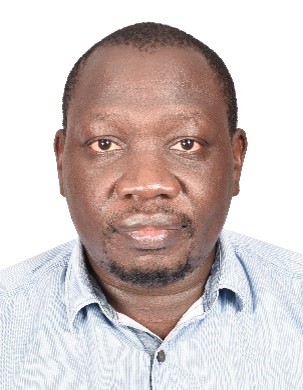
Senior Research Scientist Molecular Ecology Marine Ecology & Molecular Science Coral Reef Ecology • Molecular Ecology • eDNA • Fisheries Location Mombasa Years of Experience 2009 to present (17 years at KMFRI) Research Interests Molecular ecology of coral reef organisms; Connectivity of propagules between marine protected areas; Application of eDNA in biodiversity assessment; Impact of exploitation on coral reef organisms; The ecology of coral reef fishes; Endangered species identification (corals, fish, clams, mollusks, mangroves, seagrasses) | Research Focus: Studying human-environment interactions on tropical coasts, centered on the evolution, ecology, and origin of biodiversity in coral reef fishes using interdisciplinary approaches combining molecular tools with field-based studies. Dr. Levy Otwoma is a marine ecologist who studies human-environment interactions on tropical coasts. His background is in molecular ecology and his passion is sustainability-focused research at the intersection of molecular science, coral reef ecology, and fisheries. His research is centered on the evolution, ecology, and origin of biodiversity in coral reef fishes. He employs an interdisciplinary approach combining molecular tools (Sanger sequencing and genome sequencing) with field-based studies to address one of the oldest yet still hotly debated questions in biology: how do species form and precisely what are the roles of geographic isolation, ecological differentiation, and selection in the diversification of lineages? The findings of this research have been integrated into resource management in the Western Indian Ocean, facilitating the effective spacing of marine reserves as well as fostering change in the approach of marine management from country-based initiatives to the establishment of transboundary collaborative marine management between (a) Kenya and Tanzania and (b) Tanzania and Mozambique. Recently, his lab in Kenya is also exploring the utility of eDNA as a biogeographic tool to identify patterns of biodiversity, study species distributions, and evaluate anthropogenic impacts on marine ecosystems. In his work he also frequently collaborates with social scientists to uncover the complex linkages between social and ecological systems, working on topics such as: defining the conditions that lead to sustainability; locating and learning from conservation; and examining how coastal societies and ecosystems respond to global environmental change. He has worked in Kenya, Tanzania, Mozambique, Madagascar, South Africa, Indonesia, Malaysia, Philippines, Thailand, Poland, and Germany, where his research has had impacts on policy and on-the-ground conservation. He has taxonomic expertise in Corals, Cetaceans, Fishes, Invertebrates, mollusks, clams, sea grass, and mangroves and has published more than 15 scientific articles. Research Interest / Areas of Expertise
Academic Qualifications
Professional Membership
Awards ASA Carnegie Corporation of New York Fellow (2024) – Awarded as a recognition of outstanding work in building sustainable African futures by the Carnegie Corporation of New York (CCNY) Post-doctoral Fellowship (2022) – Future Africa Leadership Fellowship (FAR-Leaf), University of Pretoria – Investigating shifting baselines and local extinctions in Kenya's exploited reef fishes Conservation Leadership Ambassador Outreach Grant – Awarded to promote conservation outreach activities among Kenya's fishing communities (700 USD) GLOMAR Travel Grant (2017) – Travelling to Stellenbosch, South Africa for a DIPnet training course (975 Euros) IFS Travel Grant (2017) – Attend the Tenth WIOMSA symposium in Dar es Salaam, Tanzania (1,355 USD) PLOS Global Participation Initiative (GPI) (2016) – Waiver to publish in PLOS One (1,495 USD) DAAD Scholarship (2014) – PhD Scholarship at the University of Bremen, Germany (50,000 EURO) Erasmus Mundus Doctoral Fellowship (2013) – Monitor the larvae of the four common bivalves in the Gulf of Gdansk, Poland (22,000 Euros) VLIR-OUS Scholarship (2010) – Master of Biology study at the Vrije Universiteit Brussel, Belgium (30,000 Euros) Selected Publications Peter LG, Saiperaki JL, Olunga J, Lyimo CM, Otwoma LM, Rumisha C, Kochzius M (2026). Genetic barcoding of flatfishes reveals diverse species distribution patterns along the Tanzanian coast. Western Indian Ocean Journal of Marine Science 25(1): 1-14. doi: 10.4314/wiojms.v25i1.1 Otwoma ML, Obuya J, Mulanda AC, Mwakha VA, Munuphe I, Olunga J, Wafula M, Mwaura J, Chimimba C (2025). Local knowledge corroborates threats of local extinctions in Kenya's exploited reef fishes. Marine Policy 177, 106650. Mwakha VA, Osuka K, Otwoma ML, Tuda P, Nordlund LM (2023). Gender analysis in fisheries: The case of the shelled mollusc fisheries in Kenya. Marine Policy. 158, 2023, 105863. Mwaura JM, Murage D, Karisa JF, Otwoma LM, Said HO (2023). Artificial reef structures and coral transplantation as potential tools for enhancing locally-managed inshore reefs: a case study from Wasini Island, Kenya. WIO J Mar Sci 21(2): pp-pp. doi: 10.4314/wiojms.v21i2.8 Stefanoudis, P. V., Talma, S., Fassbender, N., Swanborn, D., Ochieng, C. N., Mearns, K., Komakoma, J. D., Otwoma, L. M., Mbije, N. E., Osuka, K. E., Samoilys, M., Shah, N., Samaai, T., Trotzuk, E., Tuda, A., Zivane, F., Wagner, D., & Woodall, L. C. (2022). Stakeholder-derived recommendations and actions to support deep-reef conservation in the Western Indian Ocean. Conservation Letters, 00, e12924. https://doi.org/10.1111/conl.12924 Otwoma, ML. (2021). Response to exploitation and life history characteristics of two Acanthurus species with divergent mating behaviour along the Kenyan coastline. Regional Studies in Marine Science 48 101979. https://doi.org/10.1016/j.rsma.2021.101979 Otwoma, ML., Reuter, H. (2019). Do differences in mating behaviour lead to differences in connectivity patterns of reef fishes? Insights from two sympatric surgeonfish species in the Indian Ocean. Marine Environmental Research. https://doi.org/10.1016/j.marenvres.2019.104760 Buckley, S.M., McClanahan, T.R., Quintana Morales, E.M., Mwakha, V, Nyanapah, J, Otwoma, L and Pandolfi, J.M. (2019). Historical reconstruction of species occurrence to prioritize conservation of fish species in diverse marine ecosystems. PLoS One. 14(2).e0211224. Otwoma, L. M. & M. Kochzius. (2016). Genetic Population Structure of the Coral Reef Sea Star Linckia laevigata in the Western Indian Ocean and Indo-West Pacific. PLoS One 11:e0165552 Otwoma ML, Diemel V, Reuter H, Kochzius M, Meyer A. (2018). Genetic population structure of convict surgeonfish, Acanthurus triostegus. Journal of Fish Biology. 93:597-605. DOI: 10.1111/jfb.13686 Links |